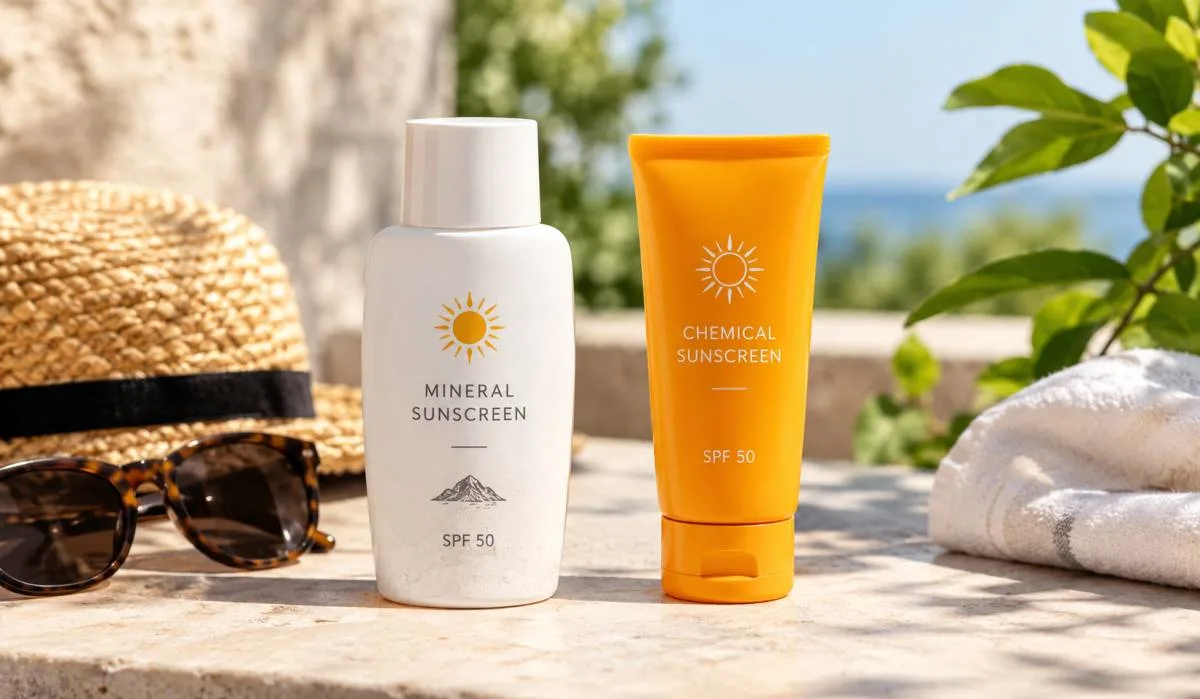
Most people ask which sunscreen is better. Wrong question. The real question is which one you will actually wear every day. I bought a fancy mineral sunscreen once. Thick, white, looked like flour on my face wore it twice. Then it sat in my cupboard for a year. My old chemical one was cheap and invisible. I went back to it.
So before you pick a side in mineral sunscreen vs chemical sunscreen for face, know this. One reflects UV. One absorbs it. Both work. The difference is your skin type, your skin tone, and your patience. Let us break it down simply.
How to Know If Sunscreen Is Mineral or Chemical?
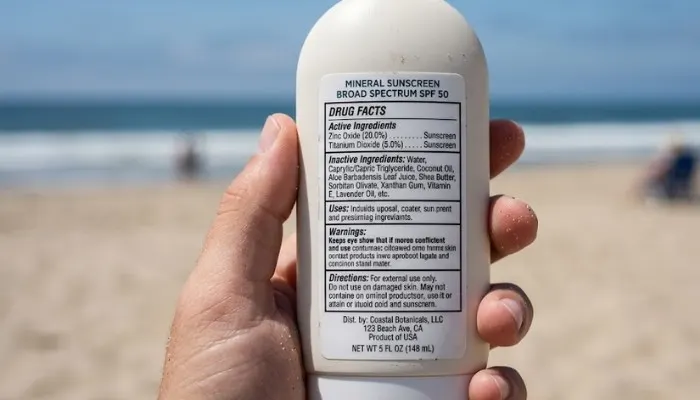
Flip the bottle. Look at the back. Not the front. The front lies. The back does not.
- Mineral. The active ingredients will say zinc oxide, titanium dioxide, or both . Nothing else. Just those two. If you see only these, it is mineral.
- Chemical. You will see avobenzone, oxybenzone, octinoxate, octisalate, homosalate, or octocrylene . These are the common ones. There are newer filters too, but these are the ones on Indian shelves.
- Hybrid. Some sunscreens have both. Zinc oxide plus avobenzone. These are common now. They try to give you the best of both. Read carefully if you want pure mineral or pure chemical.
One more thing. The word "physical" or "organic" on the label does not mean much. Brands use these words loosely. Ingredients are the truth. Check the back.
Read More: Peptide Skincare Routine for Beginners: A Simple Guide
How They Actually Work?
- Mineral works like a tiny mirror. Zinc oxide and titanium dioxide sit on top of your skin. UV rays hit them and bounce away. The skin underneath stays safe .
- This is why mineral works immediately. You apply, you walk out. No waiting .
- Chemical works like a sponge. It soaks into the top layers of skin. UV rays hit the skin and the chemical filters absorb them. Then they convert the UV into heat and release it .
This is why chemical needs time. Fifteen to twenty minutes before sun exposure. Otherwise you are not fully protected .
Mineral Sunscreen vs Chemical Sunscreen for Face: Which Is Better
Depends on your skin. And your patience. And your skin tone. Let me break it down.
If You Have Sensitive Skin
- Go mineral. This is the clear answer. Zinc oxide and titanium dioxide are gentler. Less likely to sting, burn, or cause a reaction .
- Dermatologists recommend mineral for people with rosacea, eczema, and post-procedure skin . Also for children .
- Chemical filters can irritate sensitive skin. Some people react to oxybenzone or avobenzone. If your skin burns when you apply sunscreen, try mineral next.
If You Have Acne-Prone Skin
- Mineral is usually safer. Zinc oxide is less likely to clog pores . But check the label. Some mineral sunscreens are thick and heavy. Those can still block pores. Look for "non-comedogenic" on the bottle.
- Chemical sunscreens can work too. Some are very light and gel-based. Those are fine for oily skin. The problem is the heavy cream chemical ones. Those clog.
- One thing though. If you are using acne treatment like adapalene or benzoyl peroxide, your skin is already dry and sensitive. Mineral is kinder in that case.
If You Have Darker Skin
- This is where mineral gets tricky. Zinc oxide leaves a white cast. On deep skin tones, it looks grey. Or purple. Or like you are wearing a mask .
- Real reviews from Indian users say this. One user with tan Indian skin said a popular mineral sunscreen left her looking "a shade of pale white" .
- But. Things have changed. Tinted mineral sunscreens exist now. They add iron oxides to match skin tones . Some Indian brands make tinted mineral sunscreens specifically for Indian skin . Those solve the white cast problem.
- Chemical sunscreens usually blend clear. No white cast. That is their biggest advantage for Indian skin .
If You Want Instant Protection
- Mineral. Always. Apply and go. No waiting .
- Chemical needs twenty minutes. If you are running late, that is twenty minutes of unprotected skin. Not good.
If You Hate the Feel of Sunscreen
- Chemical usually feels lighter. Blends easier. No thick layer sitting on your skin .
- Mineral can feel heavy. Some are thick and hard to spread. Modern ones are better, but many are still goopy.
So if texture matters to you, try a light chemical first. Or a hybrid. Or a modern mineral that is specifically marketed as lightweight.
Best Mineral Sunscreen for Indian Skin
The best mineral sunscreen is the one that does not make you look like a ghost.
Look for these things.
- Tinted. Iron oxides in the formula. This neutralises the white cast. Better for Indian skin tones.
- Lightweight formula. Not the thick cream type. Gel or lotion.
- SPF 30 or higher. SPF 50 is better for Indian sun.
- Non-comedogenic. If you have acne-prone skin.
Some options that come up in reviews. Cetaphil Daily Defence is mentioned as good for acne-prone skin and affordable . La Roche-Posay Anthelios is matte and lightweight but pricey . Indian brands like Safescreen make tinted mineral sunscreens matched to Indian skin tones .
Do not buy blind. Patch test. And check return policies if buying online.
You May Also Read: Beauty Habits That Make You Look Younger Naturally Every Day
The White Cast Problem
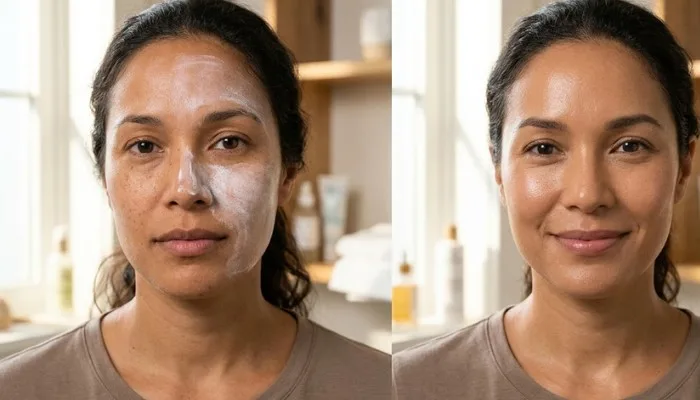
Let me be honest about this. This is the biggest complaint against mineral sunscreen in India.
- Zinc oxide is white. Titanium dioxide is white. You put white powder on your face. It shows.
- On fair skin, it might blend okay. On wheatish skin, it might look ashy. On dusky or deep skin, it looks grey.
- The fix. Tinted mineral sunscreen. The tint is not for coverage. It is to cancel the white. Iron oxides add colour that matches your skin .
If you cannot find a tinted one that matches you, then chemical might be your better option. Simple as that.
Quick Table
| Mineral | Chemical | |
|---|---|---|
| Ingredients | Zinc oxide, titanium dioxide | Avobenzone, oxybenzone, etc. |
| How it works | Reflects UV | Absorbs UV, turns to heat |
| Wait time | None | 15-20 minutes |
| White cast | Yes, common | No |
| Good for sensitive skin | Yes | Sometimes irritating |
| Good for acne-prone | Usually yes | Check formula |
| Texture | Can be thick | Usually lighter |
| Best for Indian skin | Tinted mineral | Clear chemical |
Last Thing
Both sunscreens work. Stop fighting about it.
Sensitive skin? Go mineral. Deep skin tone and hate white cast? Go chemical. Oily and acne-prone? Light mineral or gel chemical. Running late always? Mineral, no wait time. Pick one use it daily. Two finger lengths and reapply every three hours outside. That matters more than the label and if you are still confused, buy the smaller bottle first. Test it for a week, your skin will tell you the truth faster than any article.
FAQs
1. How to know if sunscreen is mineral or chemical?
Read the back. Zinc or titanium means mineral. Avobenzone or oxybenzone means chemical.
2. Which is better for face?
Mineral for sensitive skin. Chemical for deep skin tones. Both protect the same.
3. Is mineral better for Indian skin?
Only if tinted. Plain mineral looks grey on us.
4. Chemical safe for sensitive skin?
Patch test first. Stings? Switch to mineral.
5. Does mineral work instantly?
Yes. Apply and go. Chemical needs twenty minutes.
6. Why does chemical sting my eyes?
Filters burn when they drip in. Use mineral near eyes.
7. Is chemical sunscreen unsafe?
No. Sun damage is riskier. Don't skip.
8. Best for acne skin?
Mineral, usually. Check non-comedogenic on the label.