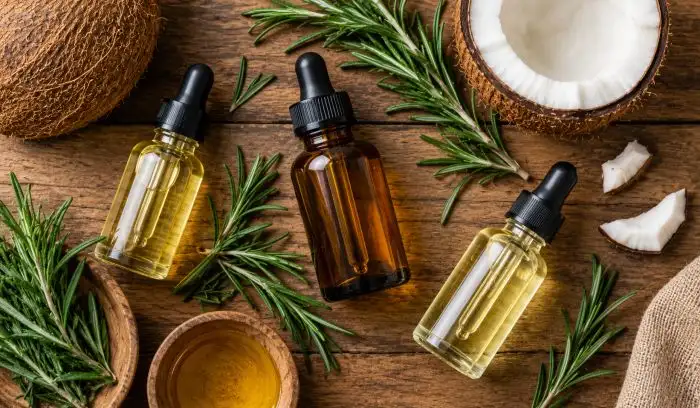
I have spent so much money on hair oils over the years. Every bottle promised thicker hair and faster growth. Most did nothing at all. Some just made my scalp greasy. A few actually worked and honestly, the ones that worked were not the most expensive ones.
They were the ones with the right ingredients. Figuring out the best natural oil for hair growth took me a lot of trial and error. So let me save you the trouble. Here is what actually works. Which oils have real science behind them and which ones are just hype. No complicated stuff Just real advice.
What Makes an Oil Good for Hair Growth?
Not all oils are the same. Some oils penetrate the hair shaft and strengthen it from inside. Others just sit on top and make your hair look greasy. Some stimulate blood flow to the scalp. Others reduce inflammation.
The best oils for growth do a few things. They improve circulation. They reduce DHT, the hormone that shrinks hair follicles. They nourish the scalp. And they strengthen the hair so it does not break.
Read More: Hair Botox vs Keratin Treatment Difference: Which Is Better?
Rosemary Oil: The Clear Winner
If there is one oil that actually has strong evidence, it is rosemary oil. Dermatologists say rosemary oil has the strongest data supporting its ability to improve circulation and support hair growth . Some studies even compare it to 2% minoxidil .
A major review of natural alternatives for hair loss focused heavily on rosemary oil, noting it has gained mass popularity as a promising natural treatment . A six-month randomized comparison with 2% minoxidil showed rosemary oil works for androgenetic alopecia .
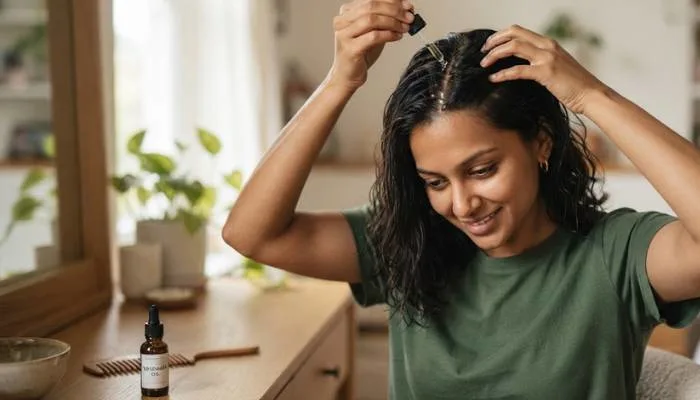
- How to use it - Rosemary oil is strong. You cannot apply it directly. Mix a few drops with a carrier oil like coconut or jojoba. Massage into your scalp. Leave for at least 30 minutes before washing. Do this 2-3 times a week.
- What to expect - Results take time. One study showed the best results after six months of use . Be patient. Do not give up after a few weeks.
Pumpkin Seed Oil: Blocks DHT
Pumpkin seed oil is another one dermatologists recommend. It naturally inhibits DHT, the hormone that causes hair follicles to shrink . DHT is a major cause of hair loss, especially in pattern baldness.
- How to use it - You can take pumpkin seed oil as a supplement or apply it topically. For topical use, mix with a carrier oil. Apply to the scalp. Massage gently. Leave for 30 minutes to an hour.
- What to expect - It works gradually. It is best used as part of a routine, not as a standalone treatment.
Coconut Oil: Strengthens Hair
Coconut oil is unique. It is one of the few oils that can actually penetrate the hair shaft. It reduces protein loss from hair . This means less breakage. Less damage. Stronger hair.
But here is the thing. Coconut oil does not directly stimulate hair growth. It strengthens the hair you have. So it does not fall out as easily .
- How to use it - Warm it slightly. Apply to your hair and scalp. Leave for an hour or overnight. Wash out with a mild shampoo. Use it as a pre-wash treatment.
- What to expect - Softer, stronger hair. Less breakage. Better texture. Not necessarily new growth.

Castor Oil: Thickens Hair
Castor oil is popular for thickness. It contains ricinoleic acid, which can help condition the scalp and hair . It is thick and sticky. So it is best mixed with a lighter oil.
- How to use it - Mix castor oil with coconut or almond oil. Apply to your scalp. Massage. Leave for 30 minutes to an hour. Wash out. Do this once or twice a week.
- What to expect - The benefits are more anecdotal than clinically proven . It makes hair look thicker because it coats the strands. But it does not directly cause new growth.
Peppermint Oil: Stimulates Growth
Peppermint oil has shown hair growth effects in animal studies. It changed follicle number, follicle depth, and dermal thickness . It also increases blood flow to the scalp.
- How to use it - Always dilute it. Mix a few drops with a carrier oil. Apply to the scalp. Leave for 20-30 minutes. Wash out.
- What to expect - It is best used as an adjunct. Not a standalone treatment .
Ayurvedic Oils: Bhringraj and Amla
Traditional Indian oils have been used for centuries. And some have real evidence.
A 2025 clinical study tested Neeli Bhringadi hair oil on people with hair loss. By day 120, hair growth rate increased to 290.29 µm/day. Hair density increased to 277.60 hairs/cm². Hair thickness increased to 16.56 µm. All changes were statistically significant .
Amla (Indian gooseberry) is also popular. It is rich in vitamin C and antioxidants. It strengthens hair and supports scalp health .
- How to use them - These oils are often already blended with coconut or sesame oil. Apply to the scalp. Massage. Leave for an hour or overnight. Wash out.
- What to expect - With consistent use, you can see improvements in density and thickness. But it takes months, not weeks.
Oils That Are Mostly Hype
Let me be honest about some popular oils.
- Argan oil - It is a great moisturizer. It makes hair soft and shiny. But there is no significant evidence supporting its use for hair growth .
- Batana oil - It is a rich moisturizer for dry, damaged hair. But it does not promote hair growth. A trichologist said there is no scientific evidence supporting batana oil for stimulating follicle growth .
- Olive oil - It is a good conditioner. But its evidence for hair growth is limited. The evidence is stronger for olive-derived compounds, not the oil itself .
- Castor oil - Again, the evidence for growth is weak. It conditions and adds shine. But it does not regrow hair .
You May Also Read: How to Make Rough Hair Smooth Naturally at Home
Quick Comparison Table
| Oil | Evidence for Growth | Best For |
|---|---|---|
| Rosemary | Strongest clinical evidence | Stimulating growth |
| Pumpkin Seed | Blocks DHT | Preventing hair loss |
| Coconut | Strengthens hair | Reducing breakage |
| Castor | Weak, mostly anecdotal | Thickness and shine |
| Peppermint | Animal studies only | Blood flow |
| Bhringraj/Amla | Clinical study shows improvement | Density and thickness |
How to Use Oils Correctly?
Oils work best as part of a routine, not as a magic cure.
- Pre-wash treatment - Apply oil to your scalp and hair. Leave for 30 minutes to overnight. Wash out. Do this 1-2 times a week.
- Scalp massage - Massaging the oil into your scalp increases blood flow. This helps the ingredients absorb.
- Do not overdo it - Too much oil clogs pores. It can cause dandruff and buildup. Use it sparingly.
- Be consistent - Oils take months to show results. Do not switch products every week.

What Doctors Recommend?
Dermatologists say oils are best used as adjuncts, not standalone treatments . They are most effective for people with dry scalps or as part of a weekly pre-shampoo ritual .
If you have significant hair loss, see a doctor. Oils can help. But they are not a replacement for medical treatment.
FAQs
1. Which oil is best for hair growth and thickness?
Rosemary oil has the strongest evidence for hair growth. It improves circulation and has been compared to minoxidil. Pumpkin seed oil blocks DHT. Bhringraj oil showed improvements in density and thickness in a clinical study.
2. What oil is best for hair loss and regrowth?
Rosemary oil is the top choice. It has clinical evidence. Pumpkin seed oil also helps by blocking DHT. For Ayurvedic options, Bhringraj oil has shown real results.
3. Can I apply rosemary oil directly to my scalp?
No. Rosemary oil is strong. You must dilute it with a carrier oil like coconut or jojoba. Mix a few drops with a tablespoon of carrier oil.
4. Does coconut oil help with hair growth?
Coconut oil strengthens hair and reduces breakage. It does not directly stimulate growth. But stronger hair means less falls out.
5. How long until I see results from hair oils?
Results take months. One study showed the best results after six months. Be patient and consistent.
6. Can I use multiple oils together?
Yes. Many hair oils are blends. You can mix rosemary with coconut. Or castor with almond. Just make sure to dilute essential oils.
7. Is castor oil good for hair growth?
Castor oil conditions and adds shine. But the evidence for growth is weak. It is more anecdotal than proven.
8. Should I oil my scalp every day?
No. Once or twice a week is enough. Too much oil clogs pores and causes buildup.