I kept seeing everyone talk about peptides online. Serums, moisturisers, eye creams. All these products with peptides. I had no clue what they actually did. It all sounded so science-y and confusing. Then I finally sat down and figured it out. And honestly, peptides are pretty simple.
They are just little messengers that tell your skin to make more collagen. No irritation like retinol. No complicated steps. Just use it and wait. A good peptide skincare routine for beginners is really easy. Wash your face, put on the serum, then moisturise. That is it. Let me explain it simply. No science talk. Just what you need to know.
What Are Peptides?
Peptides are short chains of amino acids. They are the building blocks that make up proteins like collagen and elastin . Think of them as tiny messengers for your skin. They signal your cells to produce more collagen and keep everything strong and smooth .
When you get older, your body makes less collagen. This leads to fine lines, sagging, and dull skin . Peptides help your skin produce collagen more efficiently. They also strengthen your skin barrier and boost hydration .
The best part? Peptides are gentle. They work for all skin types. Even sensitive skin handles them well . No peeling. No redness. Just gradual improvement.
Read More: Beauty Habits That Make You Look Younger Naturally Every Day

What Peptides Can Do For Your Skin?
Peptides are not an overnight miracle. But with consistent use, they make a real difference .
- Firmer skin - Peptides support collagen and elastin production. This helps your skin feel more resilient and bouncy .
- Smother texture - Peptides help improve the look of uneven skin texture .
- Stronger moisture barrier - Peptides often come with hydrating ingredients like hyaluronic acid and ceramides. This keeps your skin feeling calm and cushioned .
- Softer fine lines - Peptides do not erase lines overnight. But consistent use makes fine lines look less noticeable because your skin looks more hydrated and supple .
- Better hydration - Some peptides help support a healthy moisture barrier. This keeps water in and irritants out .
Peptides vs Retinol: What Is the Difference
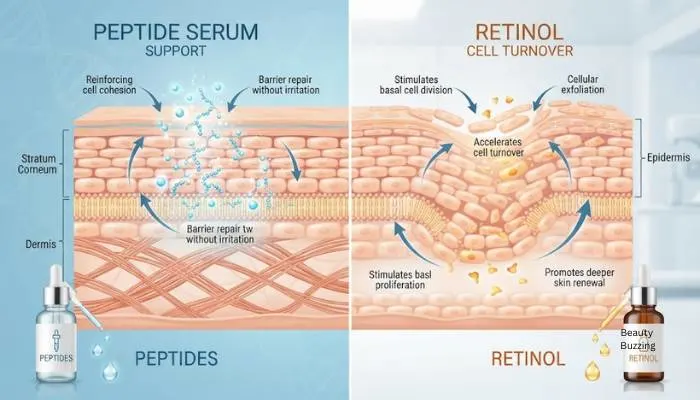
Retinol and peptides are often compared because both are used for anti-ageing. But they work very differently.
- Retinol encourages faster skin turnover. It tackles pigmentation and acne. But it can be drying and irritating for beginners .
- Peptides are supportive and gentle. They rebuild and reinforce your skin. They strengthen the barrier without irritation .
The good news is you do not have to choose. Retinol and peptides work well together. One skincare expert described them as the "dream team" . Retinol pushes your skin to renew itself. Peptides help it recover and stay strong .
Peptide Skincare Routine for Beginners Step by Step
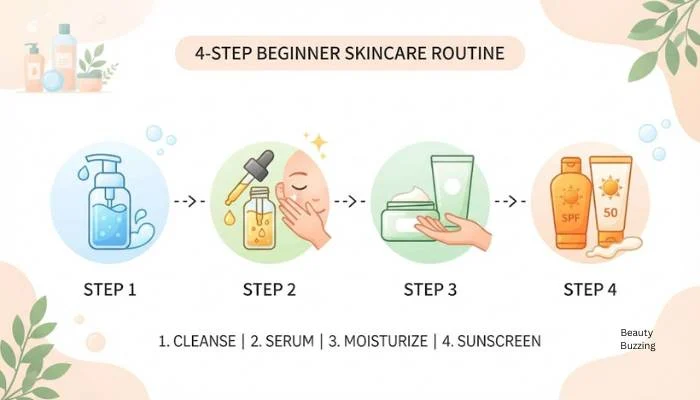
Peptides are very easy to add to your routine. Here is how to do it.
Morning Routine
- Cleanse - Wash your face with a gentle cleanser. Nothing harsh.
- Apply peptide serum - Put a peptide serum on clean skin. Let it absorb completely .
- Moisturise - Use a moisturiser to lock everything in.
- Sunscreen - Always finish with SPF. Peptides work well with sunscreen .
Evening Routine
- Cleanse - Wash your face to remove dirt and makeup.
- Apply peptide serum - Same as morning. On clean skin.
- Moisturise - Lock it in.
- Retinol (optional) - If you use retinol, apply it after your peptide serum. Or use peptides on nights you do not use retinol .
What to Look For?
When buying peptide products, look for these things :
- Clinically supported peptide complexes
- Packaging that preserves stability (like airless pumps)
- Formulas with hydrators like hyaluronic acid, ceramides, or panthenol
- Good delivery systems that help peptides absorb
What Not to Mix With Peptides?
Peptides are generally safe to layer with most ingredients. But there is one thing to avoid.
- Do not use peptides with strong acids like glycolic acid or salicylic acid at the same time. Acids can break down the peptide bonds and reduce their effectiveness .
- Use acids in the morning and peptides at night. Or use them on alternate days. This way both ingredients work properly.
How Long Does It Take to See Results?
Be patient with peptides. They are about long-term skin health, not quick fixes .
- Hydration benefits - You may notice softer skin within days .
- Texture improvement - A few weeks of consistent use .
- Firming and fine lines - Several weeks to a few months .
Do not expect an overnight transformation. Peptides work gradually. But they are worth it .
You May Also Read: Beauty Drinks for Glowing Skin That Work Naturally
Tips for Beginners
- Apply on clean skin - Peptides work best on freshly cleansed skin .
- Use a serum - Serums are the most effective peptide products. They deliver the active ingredients directly to your skin .
- Stay consistent - Daily use gives the best results. Do not skip days .
- Keep your skin hydrated - Peptides thrive in a well-hydrated environment. Use hydrating toners or essences before your peptide serum .
- Do not expect miracles - Peptides are supportive, not corrective. They help your skin function better over time .
Final Words
Peptides are one of the gentlest and most effective ingredients you can add to your routine. They support your skin without causing irritation. They work well with other active ingredients like retinol and vitamin C.
Start simple. Use a peptide serum morning and night on clean skin. Follow with moisturiser. Be patient. Results take time but they come.
Your skin will look smoother, feel firmer, and stay better hydrated. That is what peptides do.
FAQs
1. What are peptides in skincare?
Peptides are short chains of amino acids. They act as messengers that signal your skin to produce more collagen and elastin. This helps with firmness, smoothness, and overall skin health .
2. Can I use peptides and retinol together?
Yes you can. Retinol speeds up cell turnover. Peptides help your skin recover. They work well together. If your skin is sensitive, use them on different nights.
3. How do I start using peptides?
Very easy. Morning and night. Wash your face. Put peptide serum on. Then moisturise. Sunscreen in the morning after moisturiser. Done.
4. Can peptides and vitamin C be used together?
Yes. Both are good for collagen. Use vitamin C in the morning. Peptides at night. Or layer them if your products are made to work together.
5. Are peptides okay for sensitive skin?
Usually yes. They are gentle. No peeling or redness. But always test a small area first. Just in case.
6. What should I avoid when using peptides?
Do not use them with strong acids like glycolic or salicylic at the same time. Acids break down peptides. Use acids at a different time of day.
7. How soon do peptides show results?
Hydration improves in a few days. Texture takes a few weeks. Firming and fine lines take a few months. Do not expect overnight magic. They work slowly but they do work.
8. What are the side effects of peptides?
Peptides are very safe. They rarely cause side effects. Some people might experience mild irritation if using a product with other active ingredients. Always patch test new products .