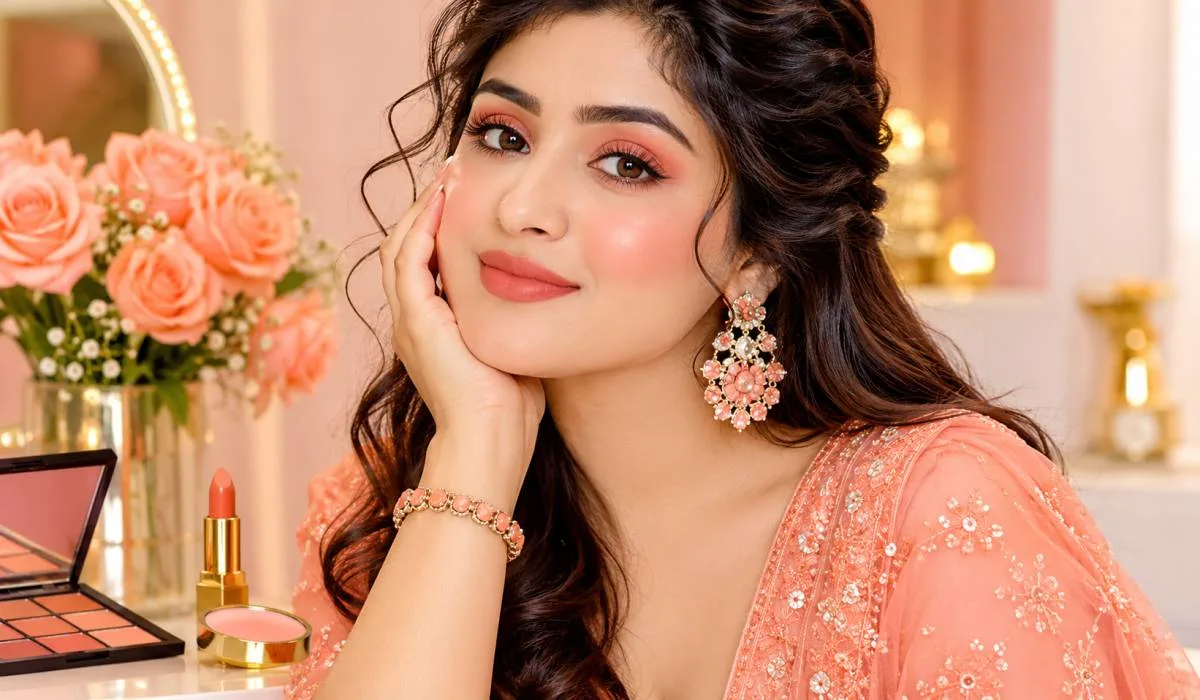
One colour, it's the concept that we have here, eye, cheek and lip same shade family, not the exact same product, same family, peach eye, peach blush, peach lip, done.I didn't use monochromes for years, intended to make it look flat, it's like one colour smeared all over the place, so I have done with browns, it was my face being done in 5 colors – a crazily done face, that is the secret.
This monochromatic makeup look tutorial is simple, three products, one family, ten minutes, one strong part, two soft parts, well, that's the secret of it, no complex blending, no colour matching
What Monochromatic Makeup Means?
Mono means one. Chrome means colour. One colour family across the whole face.
- Not one product used everywhere. That is a common confusion You do not use your lipstick on your eyes. Some products are not safe for the eye area and the textures are different.
- It means. Pick a family Peach, Rose, Brown, Berry. Then choose one product for eyes, one for cheeks, one for lips. All from the same family.
- The effect Cohesive, Calm Put together No colour clashes nothing fights for attention.
This is why it works so well for Indian skin. Warm families like terracotta, brown, and peach flatter wheatish and dusky tones.
Read More: Eyeshadow Tutorial: Easy Step-by-Step Guide for Beginners
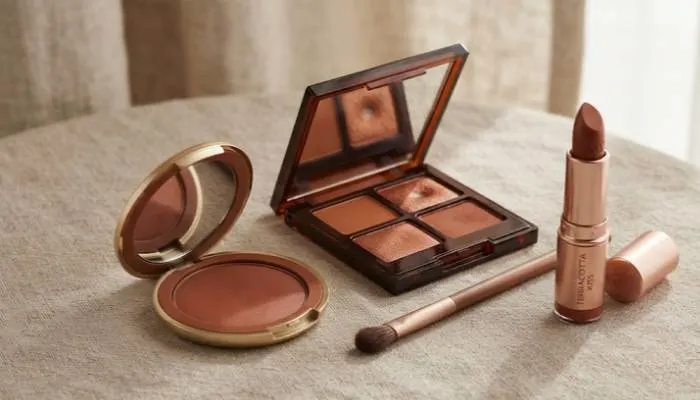
The Rule Nobody Tells You
Not all the same intensity.
This is where beginners fail, they use a bright peach eye, bright peach blush, and bright peach lip, then they look like a single orange blob, the fix, vary the depth, keep one part strong, keep the rest soft, example, deep brown eye, soft peach blush, nude peach lip, one strong point, two soft ones, or, soft brown eye, warm terracotta blush, deep brick lip, now the lip is strong, one strong, two soft, always, that is the whole trick.
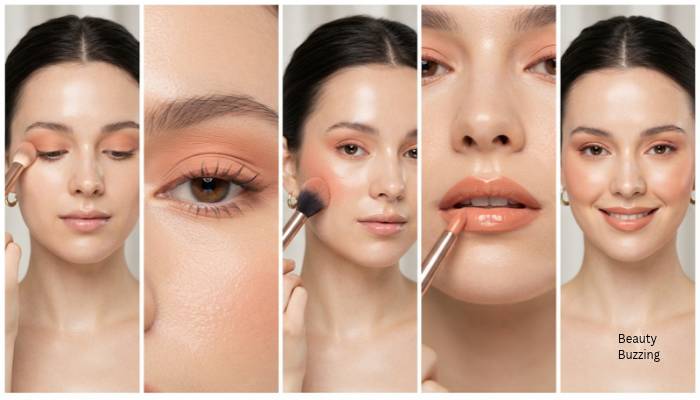
Monochromatic Makeup Look Tutorial Step by Step
Follow this order. It works for any colour family.
Step 1. Pick your family, Start with brown or peach if you are new these are the easiest on Indian skin.
Step 2. Do the base first. Foundation, Concealer, Powder keep the base clean and neutral no bronzer, no highlighter yet. Let the colour family do the work.
Step 3. Eyes first. Take your medium shade apply on the lid. Then take the deeper shade from the same family. Put it in the crease and outer corner blend add a light shimmery shade from the same family on the brow bone if you want.
Step 4. Cheeks next. Use a blush from the same family apply on the cheekbone. Less than you think blend well. If the eye is strong, keep the blush soft.
Step 5. Lips last match the family. If the eye is soft, go stronger on the lip, If the eye is strong, go nude or soft on the lip.
Step 6. Highlighter, One light dot on the cheekbone not a strong gold. Something neutral you do not want a second colour entering.
Step 7. Check in daylight blend anything that looks harsh done.
Ten minutes. Three products plus base. No contouring needed. That is the whole look.
Monochromatic Eye Makeup Look
The eye is where it shows most. So here is the detail.
The One Palette Method
- Use one palette. That is it. Monochrome is easier than any other look because everything already matches.
- Take three shades from one palette. Light, medium, dark all in the same family.
- Light on the lid. Medium in the creas dark in the outer corner blend the edges.
- That is a complete monochromatic eye. No other palette needed.
The Single Shade Method
Even simpler. One eyeshadow. One shade. Apply all over the lid. Then add a second layer in the crease with the same shade. Build the intensity. No blending between colours needed because there is only one colour.
This is the fastest monochromatic eye there is. Three minutes.
The Wash Method
One shade, Softly all over the lid and slightly above the crease. No sharp edges. Just a wash of colour.
Good for daily wear. Good for beginners. Good for older eyes because soft washes do not settle into lines the way heavy shadow does.
Monochromatic Eyeshadow Palette
You do not need a special palette. But some work better.
Look for palettes with shades in one family. Light, medium, dark, and a shimmer. Four to six shades. Not twelve random colours.
- Brown and nude palettes. The most versatile. Works on all Indian skin tones. Start here.
- Peach and coral palettes. Warm. Good for summer and day events.
- Rose and mauve palettes. Cooler. Good for office and evenings.
- Berry and plum palettes. For night. Deep and rich.
- Terracotta palettes. Very Indian. Flatters wheatish and dusky skin.
Skip for monochrome. Palettes with ten different colours. You will only use three. And the rest will confuse you.
One warning. Keep the shimmer shade from the same family. A gold shimmer in a rose palette breaks the monochrome. It becomes a mixed look. Not bad, but not what you are going for.
You May Also Read: Latte Makeup Tutorial for Beginners: Easy Steps for a Glowy Look
Monochromatic Makeup Trend
This is not new. It has been around for decades. It comes back every few years. Right now it is popular because of minimalism. People want fewer products, faster routines, and looks that do not need touching up.
Why it works. It flatters everyone. It photographs well. It is fast. And it does not need skill. No complex blending between colours. No matching of contrasting shades.
Where you see it. Wedding guest looks. Office wear. Editorial photos. Instagram. It has become the standard "put together" look.
One thing that changed. People now use cream products for monochrome. Cream blush on cheeks and lips. Cream shadow on eyes. The same family, different textures. It looks more modern than powder everywhere.
Complementary Eye Makeup
This is the opposite of monochrome. Worth knowing, so you do not mix them up.
- Complementary means opposite on the colour wheel. Orange and blue. Purple and yellow. Green and red.
- Complementary eye makeup uses two colours that contrast. It is bold,dramatic. It is for photos and parties.
- Monochromatic uses one family. Complementary uses two opposite families.
- Do not mix them. A monochrome face with complementary eyes looks confused. Pick one approach per look.
If you want to try complementary, start with one strong colour on the eye and its opposite on the lower lash line. Small amount. Not the whole lid. Complemetary can go wrong fast.
Common Mistakes
- Same intensity everywhere. The main one. One strong, two soft. Always.
- Wrong family match. A warm peach eye with a cool pink lip. Not monochrome. Breaks the look.
- Too much product. Monochrome with heavy layers looks muddy. Thin layers. Build slowly.
- Skipping the base. The colour family shows better on clean, even skin. Do the base properly.
- Strong highlighter in a different tone. Gold highlighter with a rose family. Clashes. Keep highlighter neutral.
- Not blending the eye. Even one colour needs blending at the edges. Soft edges, always.
- Forgetting the brows. Monochrome looks unfinished with messy brows. Fill them. Neutral brown. Same family as the hair.
Quick Table
| Family | Best for | Skin tone |
|---|---|---|
| Brown | Daily, office | All tones |
| Peach | Day events, summer | Warm tones |
| Rose | Office, evening | Fair to wheatish |
| Terracotta | Weddings, Indian wear | Wheatish, dusky |
| Berry | Night, winter | All tones |
| Plum | Evenings | Dusky, deep |
FAQs
1. What is monochromatic makeup?
One colour family on eyes, cheeks, and lips. Not the same product. Same family. One strong part, two soft parts.
2. Is monochromatic makeup good for beginners?
Yes. It is easier than mixed looks. One palette covers eyes. One blush. One lip. Nothing to match.
3. How do I stop monochrome looking flat?
Vary the intensity. One strong, two soft. And use a shimmer shade from the same family on the lid or brow bone.
4. What is a good monochromatic eyeshadow palette for Indian skin?
Brown, terracotta, or peach palettes. Warm families flatter wheatish and dusky tones. Four to six shades in one family.
5. What is complementary eye makeup?
Two opposite colours from the colour wheel. Orange and blue. Purple and yellow. Bold. Not the same as monochrome. Do not mix the two.
5. Can I do monochrome with cream products?
Yes. Cream blush on cheeks and lips. Cream shadow on eyes. Same family. Looks more modern than powder everywhere.
Last Thing
Pick one family, Brown or peach to start, one strong part, two soft parts, blend the edges, check in daylight. Do it five times with the same family before you try a new one, your hands learn the balance, then try terracotta, then berry, one family per week.One colour, three products, ten minutes, that is the whole look