I have sensitive skin and I never thought of using retinol. Each attempt would cause my skin to become red, flaky, and irritated. It would sting and burn! I gave up on it completely. But I still wanted something that would help with fine lines and dullness. Then I found out about retinol alternatives. And honestly, they changed everything. No irritation. No redness. Just smoother, brighter skin.
Finding the best retinol alternative for sensitive skin took time but now I know what actually works. Bakuchiol, azelaic acid, lactic acid. Gentle ingredients that give results without the harsh side effects. Let me tell you about them. No complicated science. Just real advice.
What Is Retinol and Why Does It Irritate Sensitive Skin?
Retinol is a form of vitamin A. It speeds up cell turnover and boosts collagen production. This helps reduce fine lines and improve skin texture . But retinol can cause dryness, peeling, and increased photosensitivity . For sensitive skin, this is often too much.
For people with reactive skin, retinol can feel off the table. The inflammation can trigger already-sensitive skin into a cycle of flare-ups .
Also, retinol is not safe during pregnancy. Doctors advise against it because vitamin A derivatives at high doses are associated with fetal development risks .
Read More: Best Skin Care Routines for Healthy Skin Naturally
Bakuchiol: The Best Natural Retinol Alternative

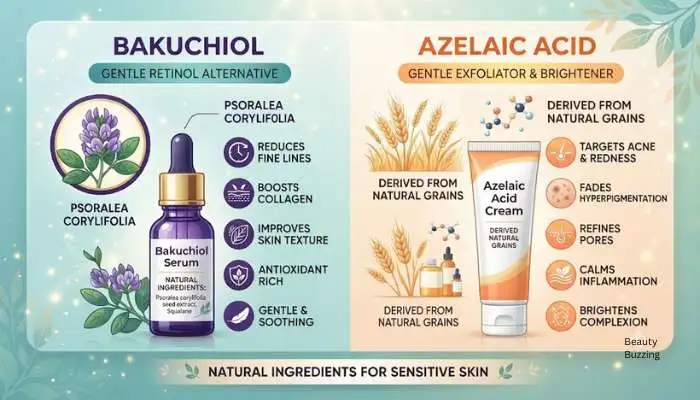
Bakuchiol is the most popular retinol alternative right now. It comes from the Babchi plant . It works similarly to retinol but without the irritation.
- How it works - Bakuchiol increases cell turnover and stimulates collagen production. It diminishes signs of aging like fine lines and wrinkles . It also has antioxidant and anti-inflammatory properties .
- Why it is good for sensitive skin - Bakuchiol reinforces the skin barrier. It supports moisture retention and reduces susceptibility to dehydration and inflammation . It does not typically cause peeling, irritation, or dryness .
- Can be used day and night - Bakuchiol is photostable. Traditional retinol degrades in sunlight and increases UV vulnerability. Bakuchiol can be used morning, evening, or both .
- Safe during pregnancy - Bakuchiol is safe for pregnancy, while all retinoids are contraindicated . It works through an entirely different biological mechanism and carries none of those systemic risks .
But a few things to keep in mind. Results are slower than retinol. Visible improvement takes 8-12 weeks with bakuchiol versus 7 days with retinol . The evidence base is also much smaller than retinol's decades of research . Product concentrations vary in ways that may not match study parameters .
Natural Retinol for Face at Home
Some people talk about natural retinol from food. Malaika Arora and Masaba Gupta both shared their retinol juice recipes. It has carrot, ginger, orange, lemon, and turmeric . Carrots have beta-carotene which your body converts to vitamin A. But here is the thing. This is not the same as applying retinol to your skin. You cannot just drink carrot juice and expect the same results.
However, eating foods rich in beta-carotene and vitamin C is good for your skin overall. It supports cell renewal and collagen production from inside . It is not a replacement for topical skincare but it helps.
Other Natural Retinol Alternatives That Work
Bakuchiol with Peptides
Some products combine bakuchiol with peptides. Peptides are short-chain amino acids that signal repair and collagen activity . They improve skin quality and hydration over time . Herbivore Botanicals has a Bakuchiol Dual Serum that combines two natural retinol alternatives with peptides .
Bio-Retinol
Some brands like ESPA offer plant-based retinol alternatives called Bio-Retinol. It is built around three plant actives. Bidens Pilosa is a plant-based alternative that helps improve the look of texture and soften fine lines . Dew Bean leaves skin appearing brighter and smoother . Rambutan leaf supports the look of improved skin firmness .
Azelaic Acid
Azelaic acid is another option for sensitive skin. It is anti-inflammatory and antimicrobial . It also inhibits melanin production and exfoliates the skin . It is effective for acne, rosacea, skin tone, texture, and pigmentation . It is also pregnancy-safe .
Lactic Acid
Lactic acid is a gentle exfoliant. It dissolves dead cells and boosts natural moisturizing factors . It is ideal for sensitive skin because it has a larger molecular size than other AHAs. It penetrates more slowly and stays more superficial. This reduces the risk of irritation .
It can improve texture, tone, and surface signs of ageing like fine lines . It does not give dramatic, prescription-level results. But it provides gentle, steady resurfacing .
Vitamin C
Vitamin C is an antioxidant that supports collagen production and protects from free radicals . It brightens skin and reduces pigmentation. It is gentle enough for sensitive skin.
You May Also Read: Best Skincare Products Under 500 Rupees for Healthy and Glowing Skin
What to Avoid?
Some ingredients are marketed as natural retinol alternatives but do not work the same way. Rosehip oil is sometimes called a retinol alternative because it has vitamin A. But the clinical evidence for direct anti-aging outcomes comparable to retinol does not exist .
It is nourishing and skin-supportive, but not a clinically equivalent anti-aging active . Sea buckthorn oil and carrot seed oil have similar issues. The antioxidant properties are real. The retinol-equivalent claim is not supported by clinical data .
Quick Summary
| Ingredient | Best For | Notes |
|---|---|---|
| Bakuchiol | Sensitive skin, pregnancy safe | Most effective natural alternative |
| Azelaic acid | Acne, rosacea, pigmentation | Pregnancy safe |
| Lactic acid | Gentle exfoliation | Use low concentration |
| Vitamin C | Antioxidant, brightening | Gentle for sensitive skin |
| Peptides | Firming, hydration | Complementary ingredient |
Final Words
If your skin cannot handle retinol, you have options. Bakuchiol is the best natural alternative. It works similarly but without irritation. Azelaic acid, lactic acid, and vitamin C also help with aging concerns.
Start slow. Patch test new products. Use sunscreen daily because these ingredients can make your skin more sensitive to the sun. Be patient. Results take time but they come. Your sensitive skin deserves care, not punishment. Choose what works for you.
FAQs
1. What is the best retinol alternative for sensitive skin?
Bakuchiol is the best natural alternative. It works similarly to retinol but does not cause irritation. It is gentle on sensitive skin and safe during pregnancy .
2. Can I use bakuchiol if I have rosacea?
Yes. Bakuchiol is well-tolerated across all skin types, including rosacea, eczema, or chronically reactive skin . It does not cause peeling or dryness.
3. Is bakuchiol safe during pregnancy?
Yes, bakuchiol is safe for pregnancy, while all retinoids are contraindicated . It works through a different biological mechanism and carries none of the systemic risks associated with vitamin A derivatives .
4. What can I use instead of retinol for anti aging?
Bakuchiol, azelaic acid, lactic acid, vitamin C, and peptides are all good options. Each works differently but can improve skin texture, tone, and fine lines .
5. Does lactic acid replace retinoids?
Lactic acid can improve texture, tone, and fine lines by gentle exfoliation. But it does not work on deeper skin receptors the way retinoids do. It is a good option if you cannot tolerate retinoids .
6. Can I use bakuchiol and vitamin C together?
Yes. Vitamin C enhances bakuchiol by amplifying its brightening, firming, and skin-renewing effects . Together they address multiple signs of aging.
7. How long does bakuchiol take to work?
Visible improvement takes 8-12 weeks with bakuchiol . This is slower than retinol, which shows improvement in about 7 days . Be patient and consistent.