
Are you trying to lose weight but getting confused by too many diets? Do not worry. This intermittent fasting weight loss guide is made for Indian people like you. I will not use any hard words or foreign ideas. I will tell you how to lose weight by simply changing your eating time.
You do not have to stop eating roti, rice, dal, or sabzi. You do not have to buy expensive protein powder. You just need a good plan. In this intermittent fasting weight loss guide, I will give you a daily schedule, a full 7-day meal plan, and real tips that work for Indian kitchen and Indian body.
What is Intermittent Fasting in Simple Words?
Intermittent fasting is not a diet. It is an eating pattern. You do not change what you eat. You change when you eat. You keep a gap between your dinner and your next meal. This gap gives your body time to use stored fat for energy.
Think of it like this. When you eat food, your body uses that food for energy. If you keep eating every two hours, your body never gets a chance to burn old fat. But when you stop eating for many hours, your body says, "No new food is coming, let me open the fat store and use that." This is how weight loss happens.
Many people in India are now trying this way. It works for people who eat roti, rice, dal, sabzi, and even chai. You do not need protein powder or expensive things. You just need a good intermittent fasting schedule and a simple 7-day meal plan for intermittent fasting.
Read More: How to Reset Female Hormones for Weight Loss: 21-Day Indian Plan
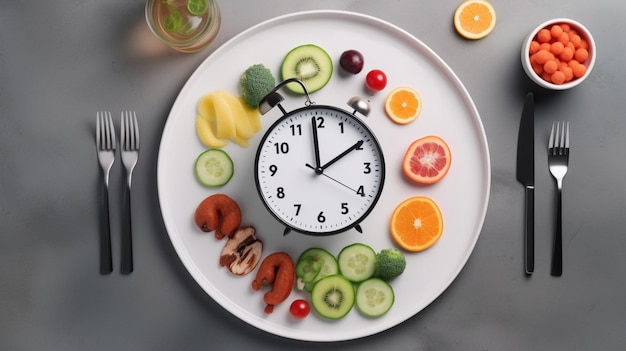
Intermittent Fasting Benefits That Matter for Indian Body
Before I give you the plan, let me tell you why this works so well for us. These are real intermittent fasting benefits that Indian people have felt.
First, your digestion gets better. In India, we eat dinner late. Many of us eat at 10 pm and then sleep by 11 pm. This means food sits in the stomach whole night. This causes gas, acidity, and heavy feeling in the morning. When you do intermittent fasting, you stop eating early. Your stomach gets empty before sleep. You wake up light and fresh.
Second, your sugar cravings go down. Most of us want something sweet after lunch or dinner. This is because our body is used to constant sugar hits. When you fast, your body learns to work without sugar. After some days, you do not feel that need for mithai or biscuit.
Third, you save time and money. You eat fewer times, so you cook less and spend less on groceries. You also do not have to think about what to eat five times a day. This is very helpful for working people and mothers.
Fourth, you do not lose muscle. Many diets make you lose muscle along with fat. But intermittent fasting keeps your muscle safe because your body uses fat for energy, not muscle.
Best Intermittent Fasting for Weight Loss
There are many types of intermittent fasting. But for Indian people, three types work very well. Let me tell you the best intermittent fasting for weight loss based on real results.
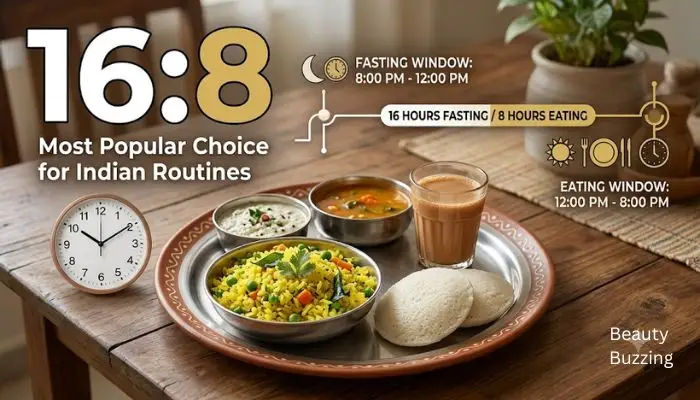
16 by 8 method – This is the most famous one. You fast for 16 hours and eat for 8 hours. For example, you eat your first meal at 11 am and last meal at 7 pm. Then you do not eat anything from 7 pm to 11 am next day. This is very easy for Indians because our dinner is usually early or can be made early.
14 by 10 method – This is for beginners. You fast for 14 hours and eat for 10 hours. This is very soft. Even people who feel very hungry can do this. Start with this if you are new.
20 by 4 method – This is for people who want fast results. You eat only in a 4 hour window. For example, you eat from 2 pm to 6 pm. The rest 20 hours you only drink water. This is hard. Do this only after you get used to 16 by 8.
For most Indians, the 16 by 8 method is the best intermittent fasting for weight loss. It fits with office hours, school hours, and family routines.
Intermittent Fasting Schedule – A Real Day in Indian Time
Let me give you an intermittent fasting schedule that works for an average Indian person who goes to office or manages home. I am taking 16 by 8 method with eating window from 11 am to 7 pm.
Wake up at 6 am – Drink one glass of normal water. Not cold water. Indian bodies like normal or warm water.
- At 7 am – You can have one cup of black coffee or black tea. No sugar. No milk. If you do not like black, you can have warm water with lemon. This is not breaking your fast.
- At 9 am – You feel hungry? Drink water. Most of the time, we think we are hungry but we are just thirsty.
- At 11 am – Break your fast. This is your first meal. Eat something solid and filling. Not juice or fruits only. Eat things like two rotis with sabzi or poha with vegetables or leftover dal rice from last night. This meal should feel like a proper lunch.
- At 1 pm – If you want, you can have something light. A bowl of curd. A handful of roasted chana. One fruit.
- At 3 pm – This is your proper lunch time if you are in office. Eat normal roti sabzi or rice dal. Do not overeat. Stop when you feel 80 percent full.
- At 6 pm – Small snack if you are very hungry. One banana. One boiled egg. A small bowl of bhel without too much oil.
- At 7 pm – Dinner. Eat light. No roti at night. Eat soup, khichdi, vegetable curry without rice, or grilled paneer. Finish by 7 pm.
- From 7 pm to 11 am next day – Only water. No chai. No milk. No biscuit. No fruit. No juice. No taste on tongue. Only plain water.
This intermittent fasting schedule is very doable for Indian people. You see, you are not skipping any big meal. You are just removing late night snacks and early morning tea.
7-Day Meal Plan for Intermittent Fasting – Indian Style
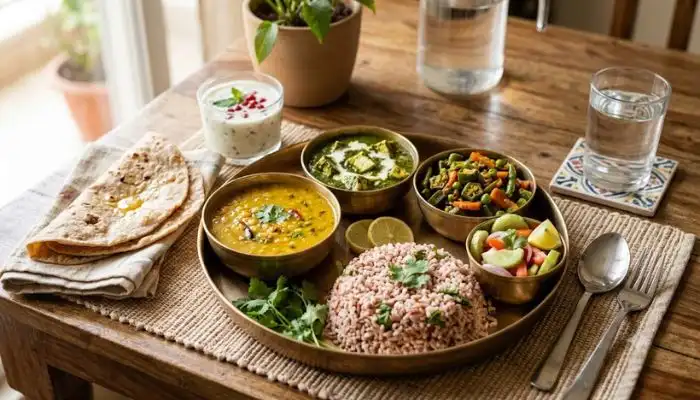
Now comes the most useful part. A full 7-day meal plan for intermittent fasting made for Indian kitchen. Everything in this plan is cheap, easy to make, and tasty. You will not feel like you are on a diet.
Before we start, remember one rule. Every day you eat your first meal at 11 am and last meal at 7 pm. Between 7 pm and 11 am, only water.
Day One – Monday
- First meal at 11 am – Two besan cheela with green chutney and a bowl of tomato soup.
- Lunch at 2 pm – Two multigrain rotis with bhindi sabzi and a bowl of curd.
- Snack at 5 pm – One apple.
- Dinner at 7 pm – Moong dal khichdi with a spoon of ghee.
Day Two – Tuesday
- First meal at 11 am – One bowl of poha with added peanuts and coriander.
- Lunch at 2 pm – One bowl of brown rice with sambar and one boiled egg.
- Snack at 5 pm – One glass of buttermilk without salt or sugar.
- Dinner at 7 pm – Grilled paneer tikka with capsicum and onion. No roti.
Day Three – Wednesday
- First meal at 11 am – Two boiled eggs and one bowl of mixed vegetable daliya.
- Lunch at 2 pm – Two jowar rotis with dal tadka and a salad of cucumber and tomato.
- Snack at 5 pm – One handful of soaked almonds and one small guava.
- Dinner at 7 pm – Lauki soup and one bowl of stir fried vegetables.
Day Four – Thursday
- First meal at 11 am – One bowl of leftover vegetable dalia from yesterday plus one fruit.
- Lunch at 2 pm – One bowl of chole with two pieces of whole wheat bread or two small rotis.
- Snack at 5 pm – One small bowl of puffed rice with chopped onion and tomato.
- Dinner at 7 pm – Paneer bhurji without too much oil. Eat as is. No roti.
Day Five – Friday
- First meal at 11 am – Two vegetable cutlets made in air fryer or on tawa with little oil.
- Lunch at 2 pm – One bowl of curd rice with cucumber and carrot grated inside.
- Snack at 5 pm – One orange or one sweet lime.
- Dinner at 7 pm – Mushroom and peas curry. Eat without roti.
Day Six – Saturday
- First meal at 11 am – One bowl of oats upma with vegetables.
- Lunch at 2 pm – Two rotis with egg curry or soya chunk curry.
- Snack at 5 pm – One small bowl of roasted chana.
- Dinner at 7 pm – Cabbage and carrot stir fry with one bowl of curd.
Day Seven – Sunday
- First meal at 11 am – Leftovers from Saturday lunch. Or make one bowl of idli with sambar.
- Lunch at 2 pm – One bowl of rajma with one bowl of steamed rice and salad.
- Snack at 5 pm – One small bowl of mixed fruit.
- Dinner at 7 pm – Tomato and moong dal soup with boiled vegetables.
Follow this 7-day meal plan for intermittent fasting and you will see change in your stomach, your energy, and your weight.
You May Also Read: 30 Day Weight Loss Challenge Indian Diet: Free Plan

What to Eat and What to Avoid in Indian Food?
Let me make this very simple. Here is a list of things that help your intermittent fasting weight loss journey and things that hurt it.
Eat these things without fear – All vegetables like bhindi, baingan, tori, lauki, cabbage, cauliflower, carrot. All dals and pulses. Eggs. Paneer in small amounts. Curd and buttermilk. Rotis made of jowar, ragi, bajra, or whole wheat. Brown rice or red rice. Fruits like apple, papaya, guava, orange, sweet lime, pear. Nuts like almond and walnut in small amounts. Roasted chana.
Avoid these things – White sugar in any form. Sweet drinks like packaged juice, cold drinks, sweet lassi. Too much oil and ghee. Deep fried things like samosa, kachori, pakoda. White rice in large amounts. Maida things like white bread, pizza base, noodles. Biscuits and packaged snacks. Too much salt. Late night food after 7 pm.
You do not have to be perfect. If you eat a samosa once in a week, it is okay. But do not make it daily. This plan is for long term.
Tips to Start Intermittent Fasting Without Pain
Many people try intermittent fasting and leave it after two days because they feel too hungry. Here are real tips that work.
- Start slowly. Do not go directly to 16 hours fasting. First stop eating at 9 pm. Then 8 pm. Then 7 pm. Give your body time to adjust.
- Drink water throughout the day. Indian people often forget to drink water. Keep a two liter bottle near you. Whenever you feel hungry, drink water first.
- Keep yourself busy. Most of our hunger comes from boredom. When you feel like eating without reason, go for a walk. Call a friend. Wash utensils. Do anything to keep your hands and mind busy.
- Sleep on time. When you sleep late, you feel hungry at night. Go to bed by 10 pm. This helps your fasting hours pass easily.
Do not do heavy exercise in the morning when you are fasting. Do simple walking or yoga. Keep your heavy workout in your eating window.
Who Should Not Do Intermittent Fasting
Intermittent fasting is safe for most healthy people. But some people should not do it without doctor advice.
- If you are pregnant or feeding your baby, do not fast. Your body needs constant food for two.
- If you have diabetes and take medicine, talk to your doctor first. Your sugar can go too low.
- If you are very thin and trying to gain weight, do not fast. Eat small meals many times instead.
- If you have eating disorder like binge eating or skipping meals always, this is not for you.
- If you are below 18 years, your body is still growing. Eat normal meals three times a day.
For everyone else, intermittent fasting is safe and helpful.
Will You Lose Weight and How Fast
This is the question everyone asks. How much weight will I lose in one month?
If you follow this intermittent fasting weight loss guide properly, with the 7-day meal plan for intermittent fasting and the right intermittent fasting schedule, you can lose three to five kilos in first month. Some people lose more. Some lose less. It depends on your starting weight, your body type, and how strictly you follow.
But do not only look at the weighing machine. Look at other changes. Your clothes become loose. Your face looks less puffy. Your stomach feels flat in the morning. You sleep better. Your skin becomes clear. These are also real results.
Common Mistakes Indians Make
Let me tell you some mistakes that stop weight loss even when you do intermittent fasting.
Eating too much in eating window. Some people think, "I am not eating for 16 hours, so let me eat double in 8 hours." This does not work. You still need to eat normal amount. No overeating.
Drinking milk tea or coffee in fasting hours. Milk has sugar. It breaks your fast. Even a small cup of chai with milk will stop your fat burning. Drink black tea or black coffee only.
Eating sweets after breaking fast. If you break your fast with a jalebi or a piece of cake, your sugar will go up and down. Break your fast with solid food like roti sabzi or eggs.
Not drinking enough water. When you fast, your body loses water. If you do not drink, you feel tired, dizzy, and get headache. Drink at least eight to ten glasses of water.
Final Words From My Side
I have seen many Indian people change their body and their health with this simple method. No expensive medicine. No gym trainer. No foreign diet. Just changing the eating time and eating normal homemade food.
Start with the 14 by 10 method for one week. Then move to 16 by 8. Use the 7-day meal plan for intermittent fasting given above. Follow the intermittent fasting schedule daily. Remember the intermittent fasting benefits when you feel like quitting. And trust the best intermittent fasting for weight loss that fits your life.
You can do this. Your body is made to heal itself. Just give it the time gap it needs. Start today. Your future self will thank you.