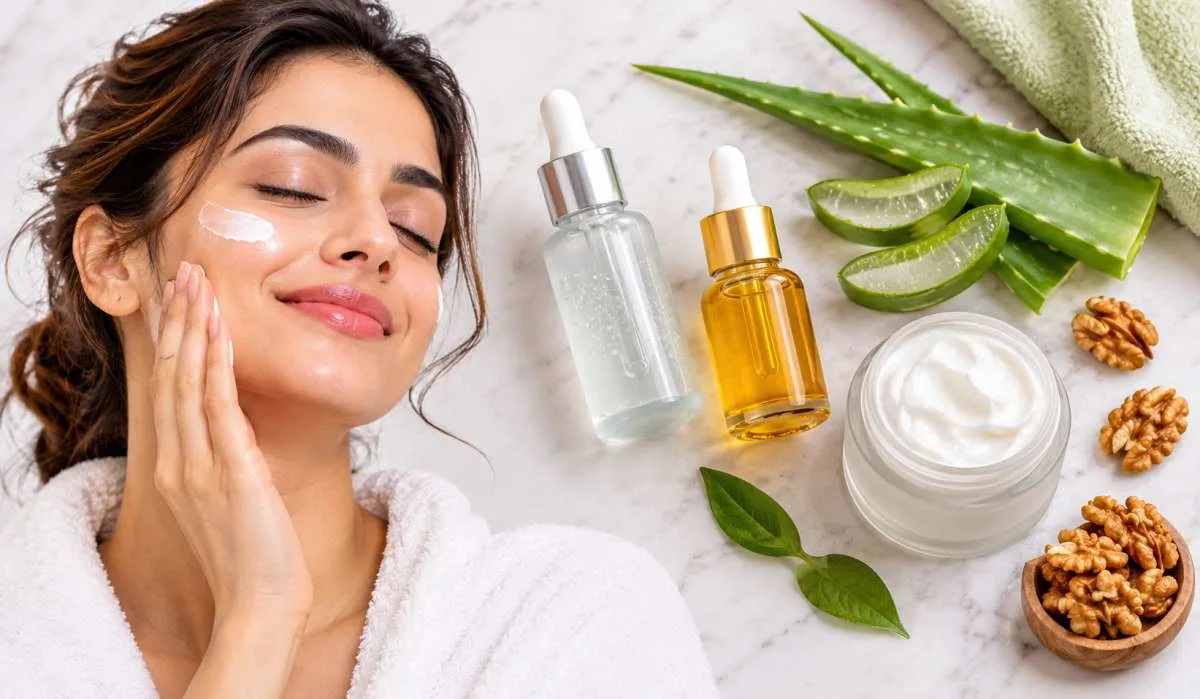
The best ingredients for dry skin are ceramides, hyaluronic acid, glycerin, and squalane. Ceramides repair your skin barrier, while hyaluronic acid and glycerin pull water into your skin. Squalane then seals that moisture in so it does not escape.
If your face feels tight after washing or makeup sits on dry patches, your skin barrier needs support. This guide covers the best ingredients for dry skin on your face, what dermatologists recommend, and how to care for dry skin from within.
First, Understand What Dry Skin Needs
Dry skin is missing two things. Water and oil, water hydrates, Oil seals you need both.
Most moisturisers only do one. A light lotion adds water but does not seal it. A heavy balm seals but does not add water. Good products do both. That is why ingredient lists matter more than brand names.
There is also a third thing. The skin barrier. This is the top layer that keeps water in. When it is damaged, water escapes no matter how much you apply. So barrier repair ingredients matter just as much as hydration.
Read More: Skincare Routine for Dry Skin in Winter: 4 Simple Steps
Best Ingredients for Dry Skin on Face
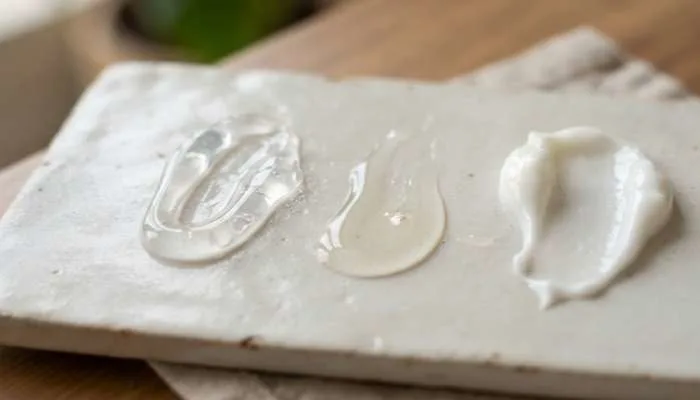
These are the ones with real evidence behind them. Not marketing claims.
Ceramides
The best ingredient for dry skin Period. Ceramides are fats that naturally exist in your skin barrier. Dry skin often has fewer of them. Applying ceramides rebuilds the barrier. Less water escapes. Skin stays hydrated longer.
Look for ceramide NP, ceramide AP, or ceramide EOP on the label. CeraVe is built on ceramides. That is why dermatologists recommend it so often.
Glycerin
- The most reliable humectant. Humectants pull water toward the skin.
- Glycerin is cheap. It is in most good moisturisers. It works. You do not need a fancy serum. Just check that glycerin is near the top of the ingredient list.
- One rule apply glycerin based products on damp skin. It needs water to pull on dry skin it does nothing.
Hyaluronic Acid
Same idea as glycerin. Pulls water in holds up to a thousand times its weight in water.
But, It needs water to work on dry skin it can actually pull water from deeper layers and make surface dryness worse. So always apply on damp skin then seal with moisturiser.
Squalane
- A lightweight oil. Very close to the oil your skin makes naturally absorbs well does not feel greasy.
- Good for dry skin that hates heavy creams also good for dry skin with acne. It does not clog pores.
Shea Butter
- Heavy. Rich. Seals moisture in. Best for very dry skin, cracked heels, and elbows.
- Too heavy for oily or acne prone skin but for dry skin in winter, it works.
Niacinamide
- Strengthens the barrier. Reduces water loss. Also calms redness.
- Five percent is enough. Higher percentages can irritate dry skin so do not chase the ten percent bottles.
Panthenol
Also called provitamin B5. Soothes and repairs. Good for dry skin that is also sensitive or irritated.
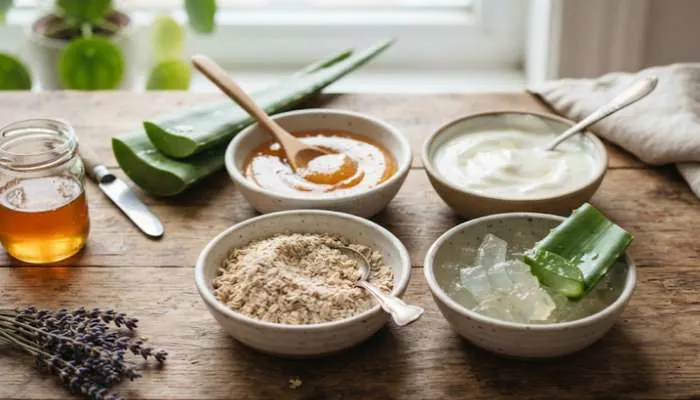
Best Ingredients for Dry Skin at Home
You do not need a pharmacy. Your kitchen has most of these.
Honey
- Pulls water in. Calms skin. Has mild antibacterial properties.
- Apply raw honey on damp skin. Leave ten minutes. Wash with lukewarm water. Twice a week.
Curd
- Lactic acid. Mild exfoliation. Adds moisture.
- Two spoons of curd. One spoon of honey. Mix. Apply. Fifteen minutes. Wash.
- Good for dry skin that looks dull. The lactic acid removes dead skin without irritation.
Aloe Vera
- Water based hydration. Light. Calming.
- Fresh gel from the leaf is best. Apply a thin layer. Leave fifteen minutes. Wash. Or leave it on as a light moisturiser.
Coconut Oil
- Seals moisture. Heavy. Not for everyone.
- Patch test first. Some people break out from coconut oil on the face. If it suits you, a thin layer at night works well.
Olive Oil
- Lighter than coconut. Good for dry patches.
- A few drops massaged into dry cheeks. Leave overnight. Wash in the morning.
Malai
- Fresh cream from milk. Old Indian remedy. Very rich.
- Apply on the face. Fifteen minutes. Wash. Once a week only. It can clog pores if used daily.
Oatmeal
- Grind oats into a fine powder. Mix with milk or curd. Apply as a mask. Fifteen minutes. Wash.
- Oats have beta glucan. Soothes and hydrates. Good for dry, itchy skin.
Banana
- Mash one ripe banana. Add a spoon of honey. Apply. Fifteen minutes. Wash.
- Potassium and moisture. Good for very dry, flaky skin. Blend smooth. No lumps.
You May Also Read: How to Reduce Skin Redness Naturally: 10 Simple Tips That Work
Best Ingredients for Dry Skin Dermatologist
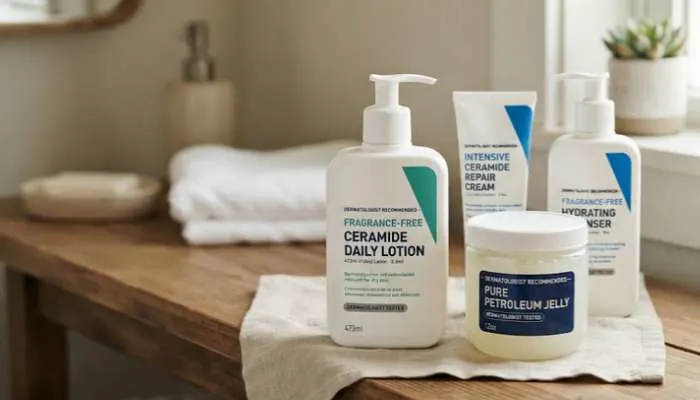
Dermatologists do not push brands. They push ingredients. These are the ones they mention again and again.
- Ceramides. For barrier repair. The top pick for dry skin.
- Glycerin. For hydration. Cheap and effective.
- Hyaluronic acid. For plumping. Apply on damp skin.
- Petrolatum. Also called petroleum jelly. The strongest occlusive there is. Seals water in better than anything else. Good for very dry patches, lips, and heels. Not elegant. But it works.
- Lanolin. For very dry, cracked skin. From sheep wool. Powerful. Some people are allergic. Patch test.
- Urea. For thick dry patches. Five to ten percent. Softens rough skin. Good for heels and elbows.
- Lactic acid. Mild exfoliation for dry skin. Removes dead skin so moisturiser can get in. Five percent is enough.
What dermatologists tell you to skip. Fragrance. Essential oils. Alcohol based toners. Harsh soaps. Physical scrubs. These damage the barrier and make dryness worse.
How to Treat Dry Skin Internally?
Most people ignore this. Dry skin starts from inside. No cream fixes a body that is dehydrated and missing fats.
Water
- Eight to ten glasses a day. Not tea, not coffee. Water.
- Simple check. If your pee is dark yellow, you are not drinking enough. Light yellow means you are fine.
Omega 3 Fats
- These keep the skin from drying out. Found in walnuts, flaxseeds, chia seeds, and fatty fish.
- A handful of walnuts daily. Or one spoon of flaxseed powder in your roti dough. Simple.
Vitamin A
Needed for skin repair. Found in carrots, sweet potato, spinach, and papaya.
Vitamin C
Helps build collagen. Found in oranges, amla, guava, and lemon.
Vitamin E
Protects skin from damage. Found in almonds, sunflower seeds, and spinach.
Zinc
Helps skin heal. Found in nuts, seeds, lentils, and chickpeas.
Good Fats
- Ghee. Coconut. Nuts. Seeds. Do not fear fat. Dry skin needs it.
- People who eat very low fat diets often have very dry skin. That is not a coincidence.
What to Cut
Sugar. Fried food. Too much caffeine. Alcohol. All of these dehydrate the body and show on the skin.
What to Skip?
- Fragrance. The number one irritant for dry skin. Check the label. Fragrance free is better than "natural fragrance".
- Alcohol based toners. Strip the skin. Skip them entirely.
- Physical scrubs. Walnut scrubs, sugar scrubs. They make tiny cuts on dry skin. Use a mild chemical exfoliant instead. Or nothing.
- Harsh soaps. Bar soaps with high pH dry you out. Use a cream cleanser.
- Essential oils. Smell nice. Irritate dry skin. Especially citrus and peppermint.
- Hot water. Not an ingredient. But it is the biggest cause of dry skin. Lukewarm only.
Quick Table
| Ingredient | What it does | Best for |
|---|---|---|
| Ceramides | Repairs barrier | All dry skin |
| Glycerin | Pulls water in | Daily use |
| Hyaluronic acid | Holds water | Damp skin only |
| Squalane | Light oil seal | Acne prone dry skin |
| Shea butter | Heavy seal | Very dry skin |
| Petrolatum | Strongest seal | Cracked heels, lips |
| Urea | Softens thick patches | Elbows, heels |
| Honey | Hydrates and calms | Home remedy |
| Curd | Mild exfoliation | Dull dry skin |
Last Thing
Read the back of the bottle. Not the front.
Ceramides. Glycerin. Squalane. Those three cover most of what dry skin needs. Apply on damp skin always. Then seal with a cream and drink water, eat nuts, Sleep. No cream fixes a dehydrated body. Start with two products. One hydrating serum, One barrier cream that is enough.
FAQs
1. What are the best ingredients for dry skin?
Ceramides, glycerin, hyaluronic acid, squalane, and shea butter. Ceramides are the top pick for barrier repair.
2. What are the best ingredients for dry skin at home?
Honey, curd, aloe vera, coconut oil, olive oil, oatmeal, and banana. Twice a week. They help but do not replace moisturiser.
3. What ingredients do dermatologists recommend for dry skin?
Ceramides, glycerin, petrolatum, urea, and lactic acid. Skip fragrance, alcohol, and essential oils.
4. How to treat dry skin internally?
Drink water. Eat omega 3 fats, vitamin A, C, E, and zinc. Include ghee and nuts. Cut sugar and fried food.
5. Is hyaluronic acid good for dry skin?
Yes, but only on damp skin. On dry skin it can pull water from deeper layers and make surface dryness worse.
6. Which is better, glycerin or hyaluronic acid?
Both work. Glycerin is cheaper and more reliable. Hyaluronic acid feels lighter. Many good moisturisers have both.